
India's 500 MWe Prototype Fast Breeder Reactor (PFBR) at Kalpakkam in Chennai has achieved first criticality, marking a significant advancement in the country's nuclear energy capabilities and long-term energy security.

Fuel loading at India's first prototype fast-breeder reactor in Kalpakkam is expected to start next week, marking a significant step in the country's nuclear program.

According to officials, the leakage of heavy water that is used in cooling off the nuclear reactor core was detected around 9 am and it was fixed in some time and the temporary emergency was lifted shortly afterwards.

Whether the ambitious targets are achievable is a moot question as India's earlier target was 20,000 MW of nuclear power by 2020.

The Indian government has come out with a nice name for its tried and tested 220MW pressurised heavy water reactor -- Bharat Small Reactor.
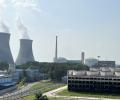
'Attacks on nuclear sites pose significant threats.'

In many ways, this is only the beginning -- of a new chapter in India's nuclear story, and of a future where its vast thorium reserves could finally power its ambitions.
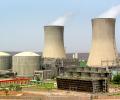
With this, the unit has exited the construction phase and began the operational phase.

Referring to global energy needs, Kakodkar said nuclear power had the pontential to meet these requirements in a sustainable manner and at the same time keep carbon dioxide emissions at the lowest possible levels.

'Bharat Small Reactors are essentially similar to the existing 220 MWe Pressurised Heavy Water Reactors. The existing regulations are applicable for BSRs.'
Presenting the Union Budget, Sitharaman announced that the government will partner with the private sector to set up Bharat Small Reactors and in the research and development of small modular reactors.
India to build four new nuclear power stations
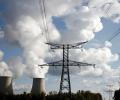
India is working on new technologies such as the small modular reactors that can be factory-built and help make clean energy transition, Science and Technology Minister Jitendra Singh said in New Delhi.

Once completed, the 10 reactors of 700 MW each will give much needed fillip to the domestic nuclear industry.
India has received the first consignment of 60 tonnes of uranium from France for use as fuel to power its nuclear reactors following clearance by the 45-nation Nuclear Suppliers Group
Nuclear Power Corporation's first indigenous 700 Mega Watt Pressurised Heavy Water Reactor at Kakrapar Atomic Power Project in Gujarat is expected to be commissioned in 2015.
The total nuclear power generated in the country would now increase to 3310 MW.

AAERB's permission for RAPP-7 paves the way for the subsequent phases of reactor commissioning leading to its commercial electricity generation.
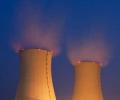
India will complete the process of putting its 14 civilian nuclear facilities under IAEA safeguards by the year end as part of a commitment made under the Indo-US nuclear deal.
Those worried say Kakrapar was lucky to have witnessed leakage of heavy and light water from the coolant channel without any serious damage to fuel bundles in the reactor.
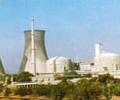
Sustained campaign forces NPCIL to issue statement on Kakrapar fuel leak. But there is still not clarity on what went wrong.

KAPP-3, the country's 23rd nuclear power reactor, is a 700 MW Pressurised Heavy Water Reactor (PHWR) designed indigenously, the NPCIL said in a release. The components and equipment for the reactor have been manufactured by Indian industries, and its construction was undertaken by various Indian contractors, it said.

The government must justify why we need to buy foreign reactors when we have developed up to 700 MWe unit-size pressurised heavy water reactors, a design which can be easily extended to 900 to 1000 MWe unit size. Why can't the 'Make in India' philosophy apply to indigenous nuclear reactors, more than 18 of which have been designed, built, and being operated by Indian engineers, asks Dr A Gopalakrishnan.
'When the cause of the leak is identified, is the AERB going to order a shutdown of all the other pressurised heavy water reactors in the country to fix the underlying problem?'
Scientists are puzzled by what caused the mysterious nuclear leak at the Kakrapar Nuclear Power Plant in Gujarat last year, reveals Pallava Bagla.

Several nuclear power projects held up for the lack of such an insurance pool can now be expected to move forward.

'Modi knows the people here are opposed to this project, but he is using the might of government to push this port down our throats.'
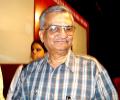
Dr Kakodkar's strategic stubbornness ultimately got India what it wanted though the negotiations with the US went to the wire, notes Shivanand Kanavi.

With the launch of the first indigenous aircraft today, India will join a club of nations like the United States, Russia, China, the United Kingdom and France that possess nuclear-powered submarines
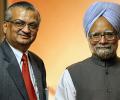
'Dr Singh, visibly relieved, said, 'Yesterday night I couldn't sleep. I stayed awake, praying throughout. You have saved the country'.' A fascinating excerpt from former atomic energy chief Dr Anil Kakodkar's memoir Fire And Fury: Transforming India's Strategic Identity.

The International Fleet Review, conceived as a show of the country's naval might and readiness for battle, saw as many as 100 naval ships, including 70 from the Indian Navy, taking part in the second edition of the coveted event.
 © 2026 Rediff.com - Advertise with us - Disclaimer - Privacy Policy - Sitemap - Feedback - About us - Terms of use - Grievances